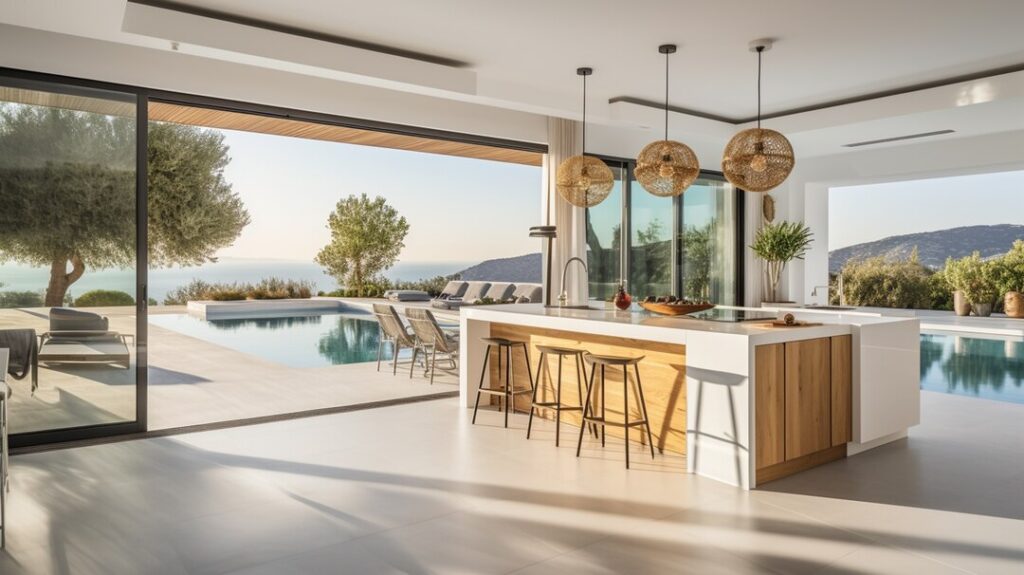
A custom outdoor kitchen in San Diego typically runs $15,000 to $85,000+, depending on layout, appliances, and trenching distance for gas and electrical. Basic grill islands start around $15,000. Full U-shaped setups with a bar, sink, and premium countertops hit $45,000 to $85,000 before any shade structure.
If you’re planning a kitchen remodel in San Diego, an outdoor kitchen is worth considering alongside it. With roughly 266 sunny days a year, your backyard kitchen won’t sit idle half the year like it would in most of the country.
How Much Does An Outdoor Kitchen Cost in San Diego ?
San Diego runs 15 to 25 percent above national averages for outdoor construction. Local labor rates, permit fees, and coastal-grade materials all contribute.
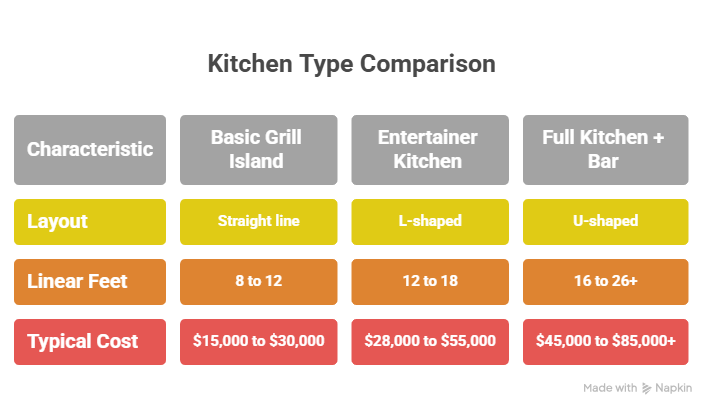
| Kitchen Type | Layout | Linear Feet | Typical Cost |
| Basic Grill Island | Straight line | 8 to 12 | $15,000 to $30,000 |
| Entertainer Kitchen | L-shaped | 12 to 18 | $28,000 to $55,000 |
| Full Kitchen + Bar | U-shaped | 16 to 26+ | $45,000 to $85,000+ |
Those figures cover the island build, countertops, appliances, and basic utility connections. They do not account for patio cover, pergola, or site work like retaining walls.
What Drives the Cost Up
The biggest cost movers are things you can’t see. Trenching for gas and electrical is a major one. If your meter sits 50 feet from the kitchen location, trenching alone can add $3,000 to $7,000.
Gas line capacity matters too. Adding a high-BTU grill plus a side burner plus a pizza oven can exceed your meter’s capacity. That means an SDG&E upgrade, which nobody wants to discover mid-build.
You’ll need at least two dedicated 20-amp circuits with GFCI and weather-resistant outlets per California Electrical Code. Each circuit runs $500 to $1,200 depending on panel distance.
Where You Can Save
A straight-line island instead of an L or U shape cuts both materials and labor. Keeping the kitchen close to the house reduces trenching costs. And a quality mid-range grill performs the same as the $8,000 flagship model.
Same principle we cover in our kitchen remodel cost breakdown: spend on the bones, not the bling. Solid utility routing and corrosion-resistant materials matter more than a wine cooler you’ll use twice a year.
Outdoor Kitchen Layouts for San Diego Backyards
Your layout decides how the kitchen actually functions and how comfortable it feels when people are over. Get this part right and everything else falls into place.
L‑Shaped Outdoor Kitchen Layout
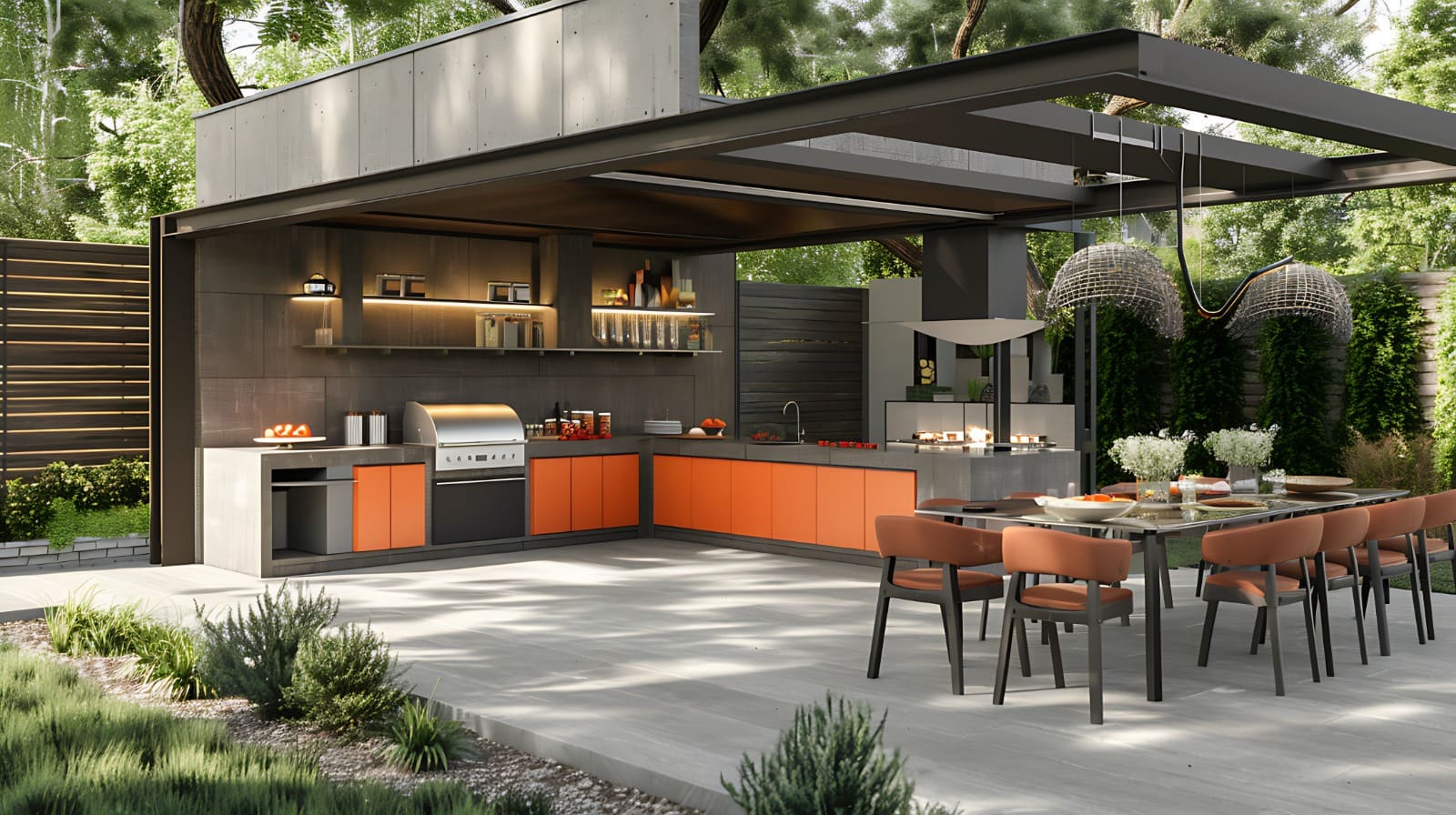
An L-Shaped setup works for almost every patio or corner, and it’s a smart pick for a small kitchen remodel in San Diego too. It fits cooking, prep, and bar zones into a tight footprint without feeling cramped, and it keeps you moving easily between stations.
U‑Shaped Layout
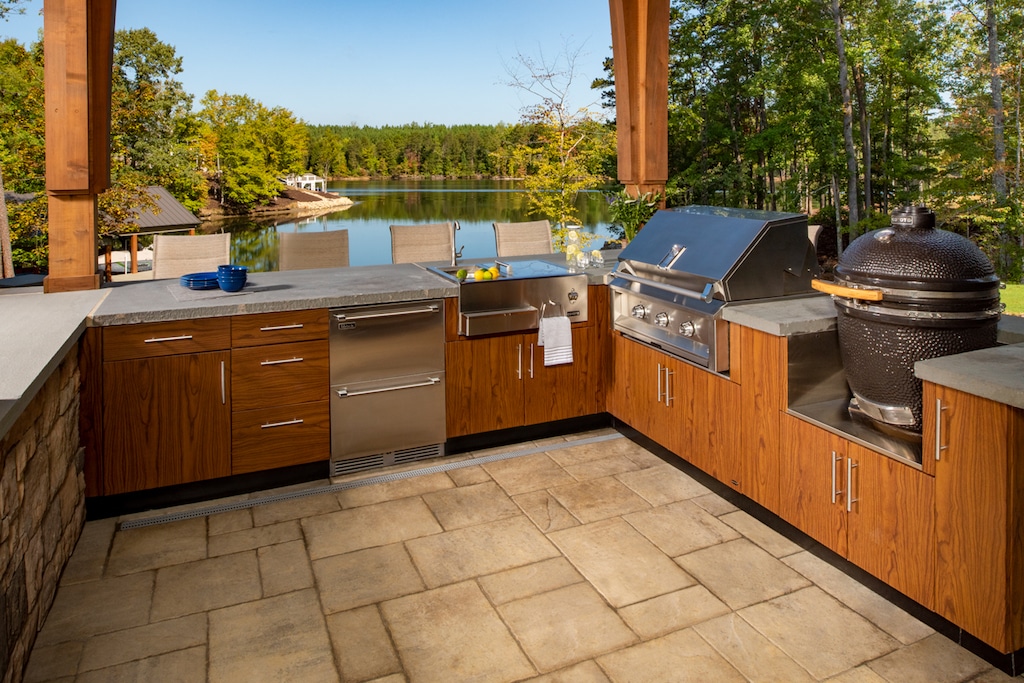
U-shaped kitchens suit larger patios and backyards. Counters and appliances wrap around three sides, often with a raised bar for casual seating, which makes them a strong choice for parties and bigger gatherings.
Island Layout
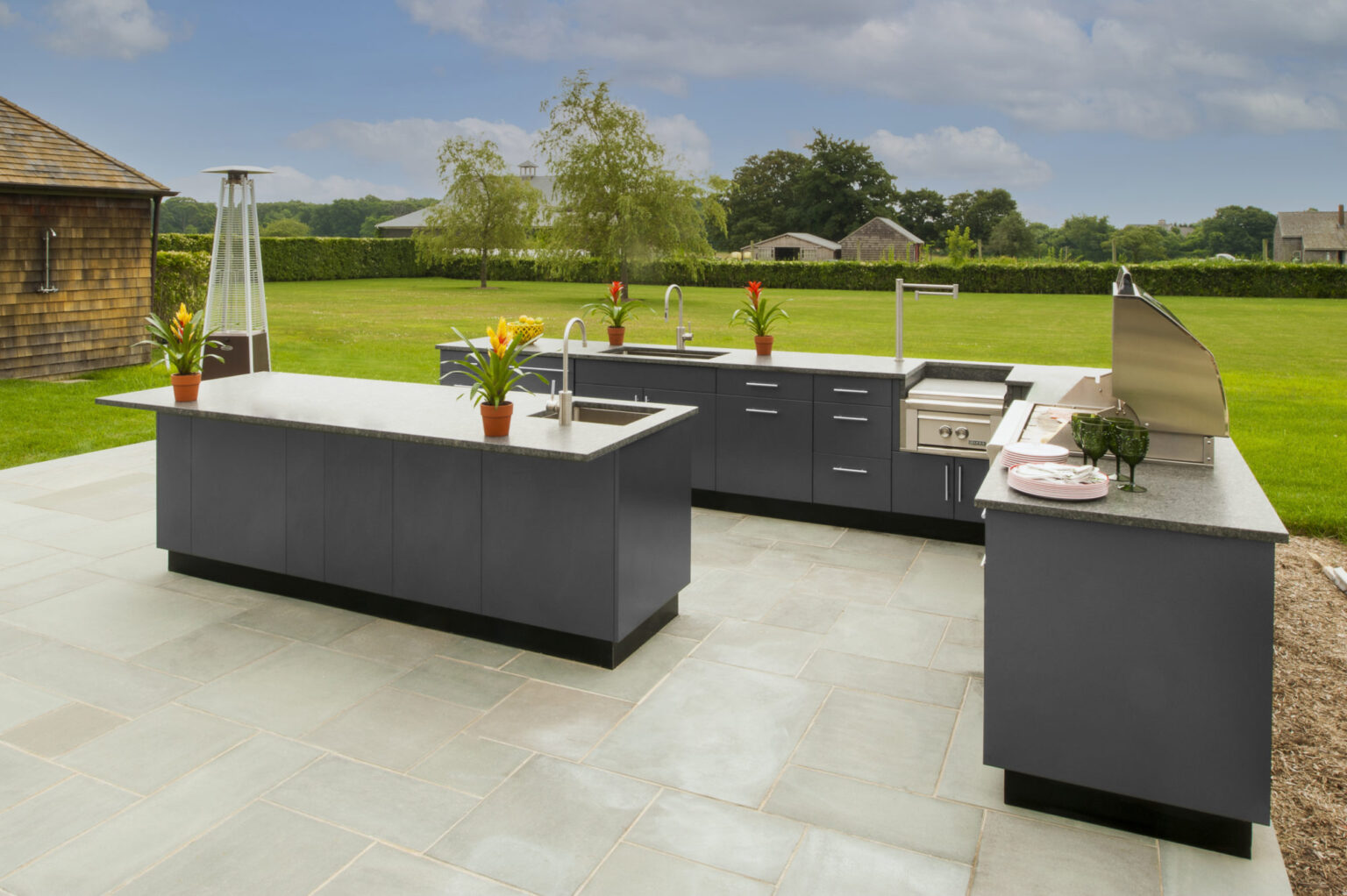
Want something open and social? An island-style kitchen puts the grill, storage, and counter space front and center, so guests can gather around the cook. It’s the layout that naturally pulls people into the conversation instead of leaving them stuck on the sidelines.
The 2026 Shift: From Grill Station to Outdoor Living Room
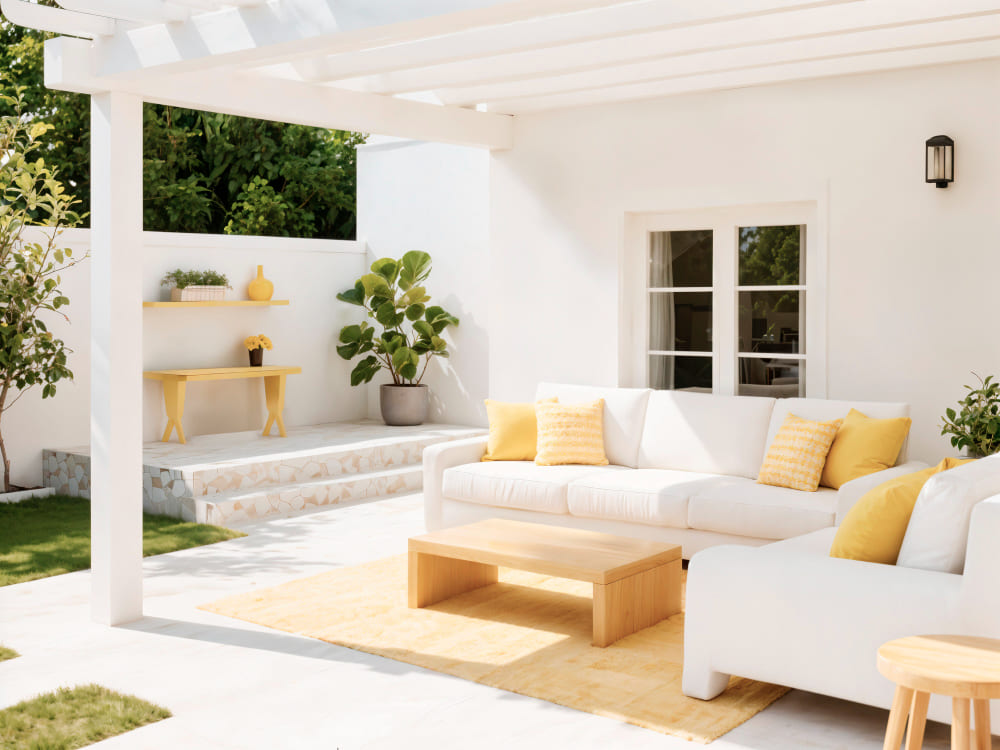
Here is what changed over the last year or so. People are not asking us for a grill on a slab anymore. They want a room that happens to be outside.
The builds we are quoting in 2026 fold the kitchen into a larger living zone. A grill core, sure, but next to its lounge area, a dining table under cover, sometimes a fire feature. The kitchen stops being the whole point and becomes one part of a backyard that gets used every evening, not just on party weekends.
A couple of things are driving this:
Drink stations are now standard, not an afterthought. For years the beverage fridge was something you bolted on at the end if the budget allowed. Now clients plan a full drink zone from day one: a dedicated fridge, a kegerator, ice storage, sometimes a small sink just for prep. The logic is simple. If you’re not running inside every ten minutes for drinks, you actually stay outside and use the space.
Modular builds are winning. Instead of pouring one giant fixed island, more homeowners want components they can add to or rearrange later. Start with a grill and counter run this year, add a pizza oven or a bar extension next year. It spreads the cost and keeps the design flexible if your needs change.
We like this trend because it matches how San Diego backyards actually get used. You’re not cooking a Thanksgiving spread out there. You’re grilling on a Tuesday, pouring a drink, and sitting down ten feet away. Design for that and you’ll be happy for years.
Materials That Survive San Diego’s Coast

This is where homeowners get burned. Materials that look great in a showroom fall apart within two years of salt air exposure.
What to Use
Concrete block or steel-framed islands for the structure. Wood framing is a hard no in San Diego. Termites and moisture will wreck it.
For countertops, granite and concrete are the most durable. Both handle UV, heat, and salt air. Porcelain slab has also become a strong pick over the last couple of years. It resists staining and UV better than almost anything and comes in finishes that mimic marble without the upkeep. Avoid quartz outdoors. It yellows in direct sunlight.
Cabinets should be marine-grade stainless steel (316 grade, not 304) or HDPE polymer. HDPE has gotten popular for good reason. The color runs all the way through the material, so scratches don’t show and it shrugs off salt air completely. We’ve ripped out two-year-old 304 stainless cabinets in Ocean Beach that looked like they’d been in a junkyard.
What to Avoid
Skip stucco finishes, stone veneer with poor backing, and quartz countertops for any outdoor application. Stucco cracks and lets moisture behind it. Stone veneer and tile lose adhesion when the substrate shifts. Fine for indoor kitchen remodels, but not outside.
Building near the coast in Point Loma, Pacific Beach, or La Jolla? Plan for a 5 to 20 percent material premium. Coastal-grade hardware and sealed fasteners cost more upfront but save you from replacing everything later.
Permits for Outdoor Kitchens in San Diego
The structure itself (a freestanding island on an existing patio) might not need a building permit. But the utilities almost always do.
What Requires a Permit
New gas lines require a plumbing permit through the San Diego Development Services Department. New electrical circuits need an electrical permit. A powered vent hood adds a mechanical permit. An island integrated with a roofed structure triggers a building permit.
Timeline
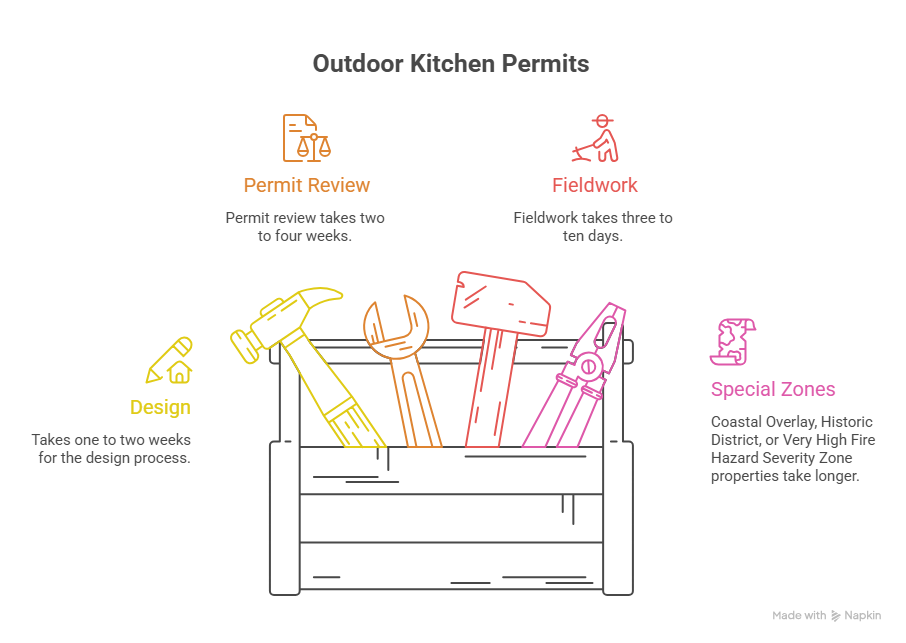
Design takes one to two weeks. Permit review runs another two to four weeks. The fieldwork itself is quick, usually three to ten days. Expect longer if your property sits in a Coastal Overlay Zone, Historic District, or Very High Fire Hazard Severity Zone.
HOA Complications
Many San Diego communities require HOA approval for visible exterior changes, even when the city doesn’t require a permit. We’ve seen homeowners in Scripps Ranch and Carmel Valley get city permits approved only to hit a wall with their HOA. Check both before spending money on design.
Your contractor should handle all permits. If they tell you to pull them yourself, that’s a red flag. Verify their license through the California Contractors State License Board.
The Installation Process
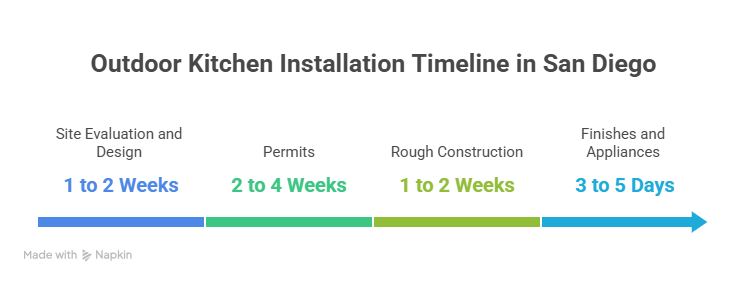
Here’s the real timeline for a mid-range outdoor kitchen installation in San Diego.
Site Evaluation and Design (1 to 2 Weeks) – We measure the space, check utility locations, and identify site issues. You choose layout, appliances, and finishes.
Permits (2 to 4 Weeks) – Gas line sizing calculated based on BTU load and run distance per California Plumbing Code. Electrical circuits spec’d per California Electrical Code.
Rough Construction (1 to 2 Weeks) – Island structure goes up. Utility rough-ins happen. Everything gets inspected before we close it up.
Finishes and Appliances (3 to 5 Days) – Countertops templated and installed. Appliances drop in. Final inspections pass.
Final Walkthrough – We test every appliance and hand over warranty documentation. Total timeline: about 6 to 10 weeks.
Mistakes Homeowners Make
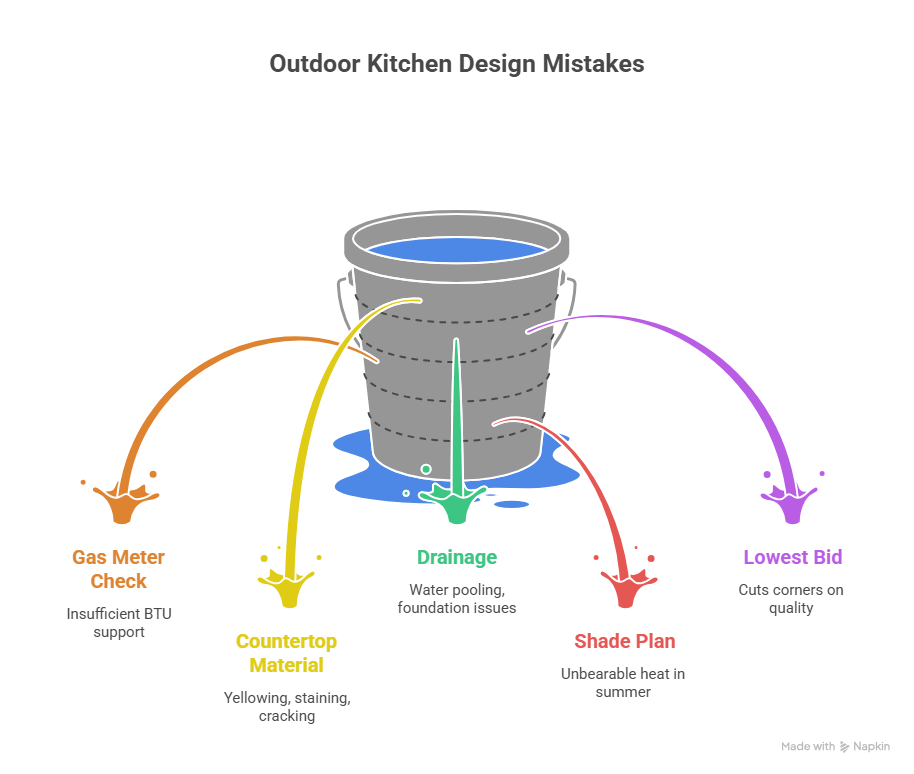
Skipping the gas meter check. Your meter might not support a full outdoor kitchen’s BTU load. A $2,000 to $4,000 problem that should be caught in design, not construction.
Wrong countertop material. Quartz yellows, marble stains, cheap tile cracks. Granite or poured concrete outlast everything else outdoors here.
Forgetting drainage. Water pooling around the island base leads to foundation issues. A $500 drain line prevents thousands in damage.
No shade plan. San Diego sun feels great in January. In August, standing over a 50,000-BTU grill with no cover is miserable. Build under a pergola or plan for one later.
Hiring the lowest bid. The cheapest outdoor kitchen contractor in San Diego usually cuts corners on utilities, materials, or permits. Our contractor hiring guide covers what to look for.
How to Choose the Right Outdoor Kitchen Contractors in San Diego ?
Most of the failed builds we get called out to fix were not design problems. Somebody hired wrong. Here is what separates the outdoor kitchen contractors in San Diego worth your money from the ones who will leave you with a cracked island and no permit history.
- Check the license classification, not just numbers: Plenty of outdoor kitchen builders hold an active license but not the right class. You want a B general contractor with licensed C-36 and C-10 subs for the gas and electrical work.
- Ask for coastal builds specifically: A contractor with 40 inland projects has not learned what salt air does to 304 stainless. Ask to see work in Point Loma or La Jolla that’s at least three years old.
- Confirm the gas load math happens before you sign: BTU load gets checked against your meter during design, not after the trench is open. No mention of gas sizing in the bid usually means a change order later.
- Compare bids line by line, never by the total: Outdoor patio kitchen contractors quote very different scopes under the same job name. The cheaper bid is often just a shorter one.
- Get the warranty split in writing: Workmanship comes from the builder, appliance coverage from the manufacturer. Find out who you call when the igniter fails in year two.
Does an Outdoor Kitchen Add Home Value?
Yes, more than most backyard upgrades. In warm-climate markets like San Diego, outdoor kitchens return 55 to 100 percent at resale. Compare that to a pool, which often comes back under 50 percent.
Part of what changed recently is how buyers see the space. With most of the year usable here, a well-built outdoor kitchen reads as a real living area, not a seasonal bonus that sits covered up half the year. That shift shows up with agents too. The National Association of Realtors has found a large majority of agents now rank outdoor kitchens among the top features for boosting resale value.
Quality is what makes the difference. A well-built kitchen with proper permits and durable materials adds value an appraiser can recognize. A DIY island with a portable grill bolted on doesn’t move the needle.
One last thing worth knowing: the features with the broadest appeal hold their value best. A clean grill core, solid counter space, and a covered, comfortable layout sell to almost any buyer.
Frequently Asked Questions
Q: How much does a basic outdoor kitchen cost in San Diego?
A: A straight-line grill island with storage and a gas hookup runs $15,000 to $30,000 as of 2026. That includes the structure, countertop, and grill.
Q: Do I need a permit for an outdoor kitchen in San Diego?
A: Trade permits for gas and electrical work are needed in almost every case. A freestanding island may not need a building permit, but anything integrated with a roof structure will.
Q: How long does outdoor kitchen installation take?
A: Plan for 6 to 10 weeks from design through final inspection. Permit review takes 2 to 4 weeks. Properties in overlay zones can take longer.
Q: What’s the best countertop for an outdoor kitchen here?
A: Granite and sealed concrete perform best. Both resist UV, heat, and salt air. Avoid quartz outdoors because it yellows. Porcelain slab is another strong choice.
Q: Can I put an outdoor kitchen under a pergola?
A: Yes, and it’s recommended for comfort. But cooking under a roof changes permit requirements and introduces clearance and venting considerations based on manufacturer specs and fire codes.
Q: What appliances do I need?
A: At minimum, a built-in grill and storage. A more functional setup adds a sink, outdoor-rated refrigerator, and prep space. Pizza ovens and smokers are popular but not essential.
Q: Is an outdoor kitchen worth it in San Diego?
A: Outdoor kitchens here return 55 to 100 percent at resale. You also gain usable living space for about 300 days a year, which is hard to put a dollar figure on.