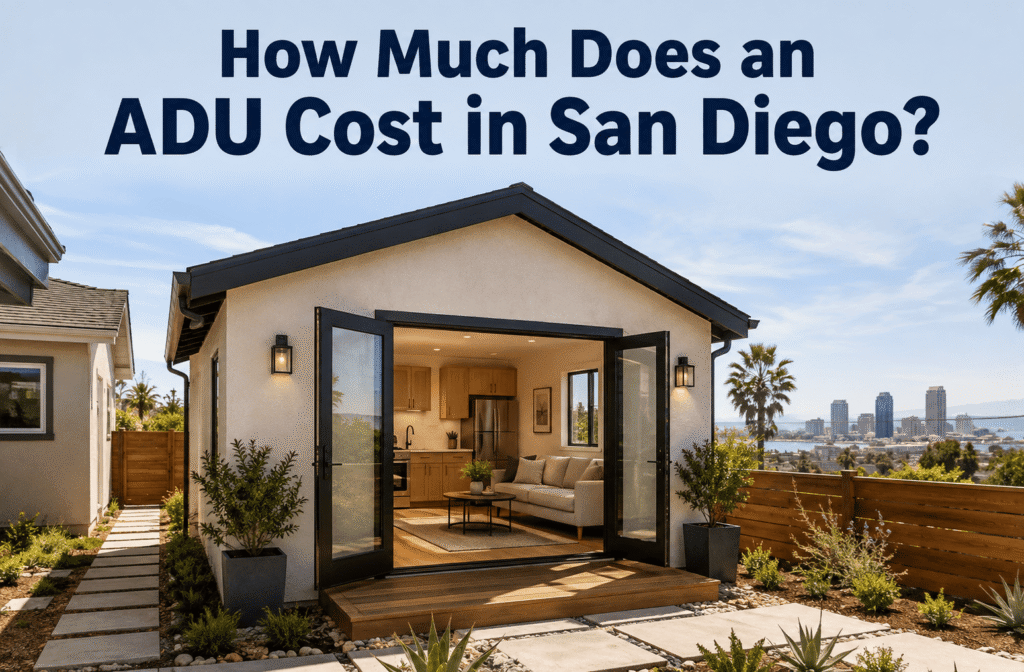
Ask five builders what an ADU costs and you will get five different answers. One says $120,000. The next says $380,000. And you are left wondering who is telling you the truth.
Both of them are. The ADU cost in San Diego jumps around this much because a garage conversion and a brand new backyard unit are two completely different jobs. So let’s go through the real numbers, one type at a time.
What is an ADU?
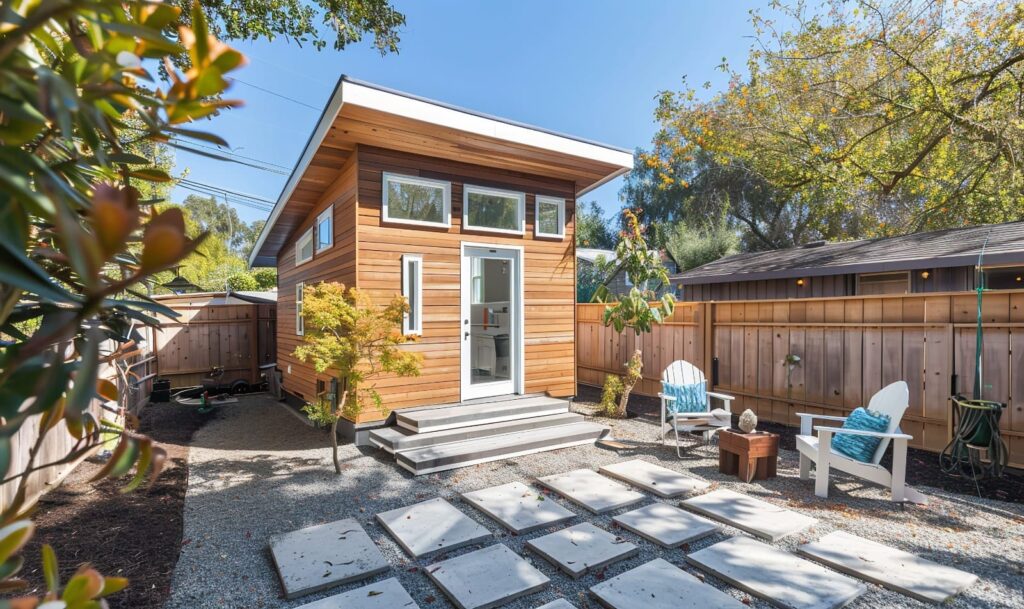
An ADU stands for Accessory Dwelling Unit. You have probably heard people call it a granny flat, a backyard cottage, or an in-law suite- same thing. It’s a second, smaller home on the same lot as your main house. And it has to be a complete home, not just an extra room. That means its own kitchen, its own bathroom, a place to sleep, and its own entrance.
An ADU can be built a few different ways. Some sit as a separate building in the backyard. Some are attached to the side of the house. Others are made by converting a garage or spare space inside the home you already own. You can see the types of ADUs we build in San Diego if you are still deciding which one fits your property.
San Diego homeowners build them for all kinds of reasons. Rental income is the big one. But plenty of families build them so aging parents can live close by, or so a kid back from college has somewhere of their own. Some people just want a quiet home office that is not the dining table.
So What’s the Actual Price?
Most San Diego homeowners spend somewhere between $150,000 and $400,000 to build an ADU they can move into. That covers the design, permits, utility hookups, and actual construction.
Want the cheapest route? Use space you already have. Want a private unit in the backyard with its own front door? Plan for the higher end of that range.
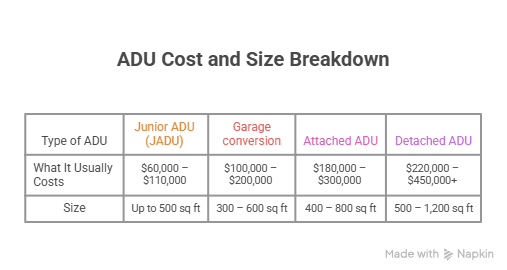
Here is how it breaks down:
| Type of ADU | What It Usually Costs | Size |
| Junior ADU (JADU) | $60,000 – $110,000 | Up to 500 sq ft |
| Garage conversion | $100,000 – $200,000 | 300 – 600 sq ft |
| Attached ADU | $180,000 – $300,000 | 400 – 800 sq ft |
| Detached ADU | $220,000 – $450,000+ | 500 – 1,200 sq ft |
The Cheapest Way In: A Junior ADU

A junior ADU in San Diego has to sit inside your existing house. It can’t be bigger than 500 square feet, and it needs its own entrance. The city lays out these rules in its ADU and Junior ADU information bulletin.
Picture a spare bedroom turned into a small living space with a kitchenette. The bathroom can stay shared with the main house, which is a big reason the price stays low. Permits alone run about $3,000 to $6,000.
If you are building this for a parent or a grown kid rather than for rent, it’s usually the smartest money you will spend.
Turning Your Garage Into a Living Space
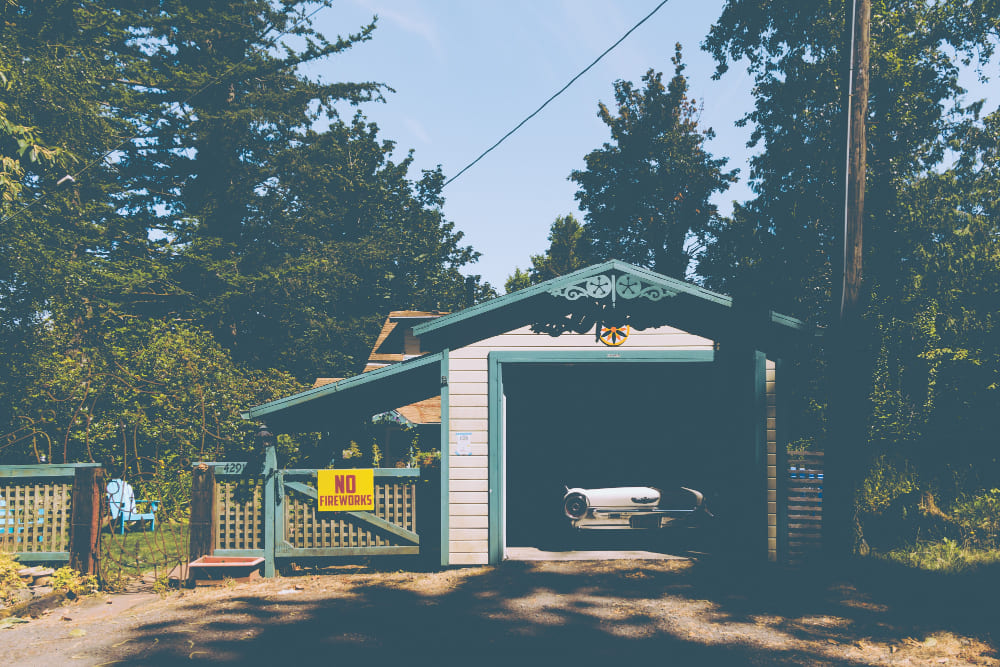
You already have the floor, the walls, and the roof- a good start.
What you don’t have is insulation, plumbing, heating, or windows big enough to meet code. That is where the money goes. Most garage conversions land between $100,000 and $200,000.
Building One From Scratch in the Backyard
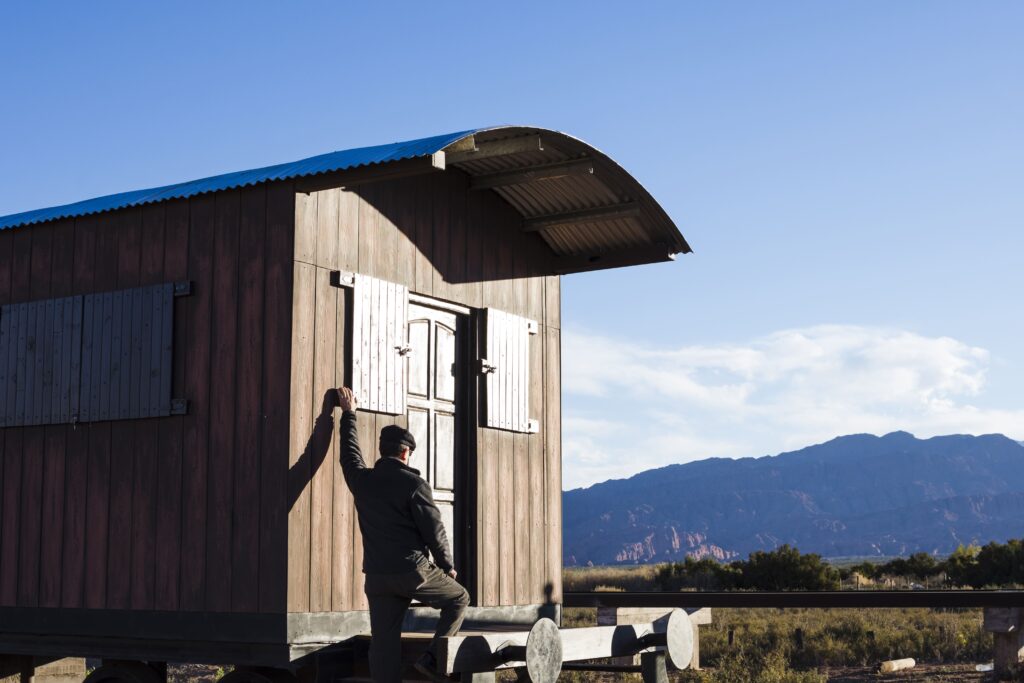
The detached ADU cost San Diego usually falls between $220,000 and $450,000. Fancy finishes push it higher.
Why so much more? Because nothing gets reused. New foundation, new framing, new roof, and new water and sewer lines running across your yard.
It’s also the type that rents for the most and adds the most to your home’s value. That’s why it stays the most popular choice, even at that price. If a full second unit feels like more than you need, a room addition is usually the cheaper way to get the extra space.
What You Pay Per Square Foot
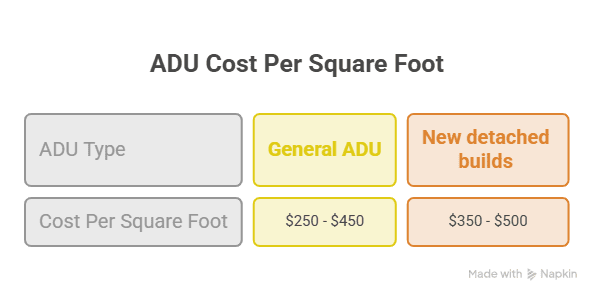
Across the country, the ADU cost per square foot sits between $250 and $450. New detached builds usually run $350 to $500 once you add in design and permit costs.
Now here is something that surprises people. Small units cost more per square foot, not less.
A 400 square foot studio still needs a full kitchen, a full bathroom, and all the same hookups as a bigger unit. Spread that over 400 feet instead of 900, and the per-foot price shoots up. A lot of homeowners find that going from 600 to 800 square feet is the cheapest space in the whole project.
The Costs Nobody Warns You About
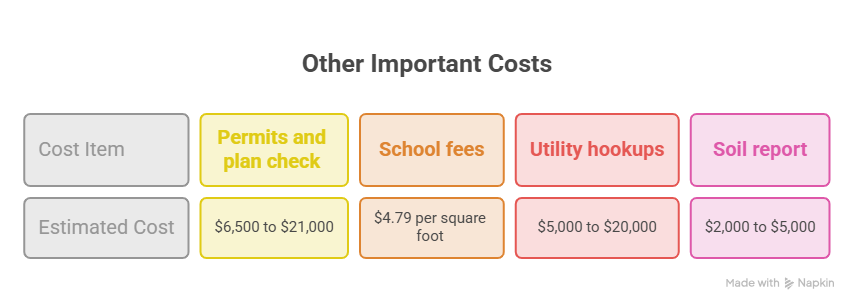
The construction quote is usually honest; it’s everything around it that blows up budgets.
- Permits and plan check: around $6,500 for a small unit, up to $21,000 for a 1,200 square foot ADU.
- School fees: kick in above 500 sq ft, roughly $4.79 per square foot in the City of San Diego.
- Utility hookups: $5,000 to $20,000 if you need a new water meter or a sewer upgrade.
- Soil report: $2,000 to $5,000, and you can’t skip it on a slope.
- Site prep: grading, tree removal, long trench runs, retaining walls.
Older neighbourhood hides one more. Homes in North Park and Normal Heights often have an electrical panel that’s too small to carry a second unit. The upgrades add a few thousand dollars and a wait time you do not control.
Get a Real Number for Your Property
Every price on this page is a starting point. Your lot slope, your setbacks, your panel, and your sewer line decide the rest. The real cost to build an ADU in San Diego only comes out after someone walks your property and looks at it.
Mel Development Inc has been building ADUs and room additions in San Diego for two decades. Licensed, insured, and A+ rated with the BBB. Get in touch for a free walkthrough, and we will give you a real number instead of a range.
FAQ
How long does it take to build an ADU in San Diego?
A good ADU in San Diego rents for $2,000 to $3,500 a month, depending on where you are and how big it is.
How many ADUs can I build on my lot?
On a standard single-family lot in San Diego, you can build up to three: one detached ADU, one converted from space you already have, and one junior ADU. The city’s ADU housing toolkit explains how the counts work by zone.
Do I have to live on the property to rent out my ADU?
For a regular ADU, no. Owner occupancy is not required, so you can rent it out and live somewhere else.
Will my property taxes go up?
Yes, but not as much as people fear. The county only reassesses the value of the new construction, not your whole property.
How close to the property line can I build?
Four feet from the side and rear lines for most detached ADUs. Front setbacks follow whatever your main house has to meet.